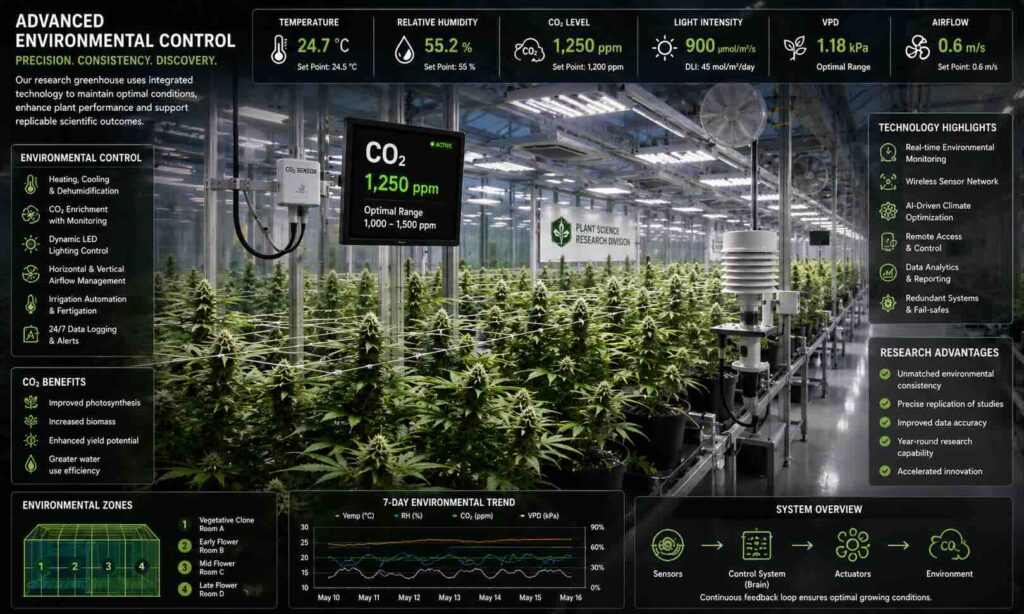
Carbon dioxide, commonly known as CO₂, is one of the essential components involved in plant development. Along with light, water, and nutrients, CO₂ plays a fundamental role in photosynthesis, the biological process through which plants convert light energy into usable resources for growth. Because of this relationship, many indoor growers become interested in CO₂ supplementation as they seek to optimize their cultivation environments and better understand the factors that influence plant performance.
While CO₂ supplementation is often discussed in advanced cultivation circles, its effectiveness depends on a variety of factors. Understanding how carbon dioxide interacts with plant biology and environmental conditions helps growers evaluate whether supplementation is appropriate for their specific cultivation goals.
The Role of CO₂ in Plant Development
Plants rely on carbon dioxide as one of the primary raw materials involved in photosynthesis. During this process, plants absorb CO₂ from the surrounding environment and combine it with water and light energy to support growth and development.
Because photosynthesis is central to plant health, environmental conditions that influence this process receive significant attention from growers. Light intensity, temperature, water availability, and carbon dioxide levels all interact to affect overall plant performance.
Understanding these relationships helps cultivators build more balanced growing environments.
CO₂ is only one part of a much larger cultivation system.
Why Growers Consider CO₂ Supplementation
Indoor cultivation environments allow growers to control many environmental variables with greater precision than outdoor gardens. Because carbon dioxide is naturally present in the atmosphere, some cultivators explore supplementation as a way to increase the availability of this resource within controlled spaces.
The idea behind supplementation is straightforward: if other environmental factors are already optimized, additional carbon dioxide may contribute to more efficient photosynthesis under certain conditions. However, supplementation is not a replacement for proper cultivation fundamentals.
Environmental balance remains essential regardless of the amount of carbon dioxide available.
Successful cultivation always begins with strong fundamentals.
The Importance of Environmental Balance
One of the most common misconceptions about CO₂ supplementation is that it can compensate for deficiencies elsewhere in the cultivation environment. In reality, carbon dioxide interacts closely with factors such as lighting, temperature, and overall plant health.
If environmental conditions are poorly managed, simply increasing CO₂ levels is unlikely to produce meaningful improvements. Growers typically focus first on creating stable and consistent conditions before considering more advanced environmental strategies.
Balanced environments help plants make effective use of available resources.
Environmental consistency often contributes more to success than any single adjustment.
Genetics and Cultivation Goals
The way plants respond to environmental conditions can vary depending on their genetic characteristics. Growth patterns, vigor, and developmental traits all influence how a cultivar performs within a specific cultivation setup.
Growers interested in exploring modern CBD cannabis genetics can learn more through graine Ministry of Cannabis. Understanding the relationship between genetics and environmental management helps cultivators make more informed decisions when evaluating cultivation strategies.
Strong genetics provide the foundation upon which environmental optimization is built.
The interaction between genetics and cultivation conditions remains a central aspect of successful growing.
Observation and Long-Term Learning
As with many aspects of cannabis cultivation, experience and observation play important roles when evaluating environmental management techniques. Growers often learn the most by monitoring plant development, maintaining records, and refining their approach over multiple cultivation cycles.
Understanding how environmental factors interact allows cultivators to make gradual improvements and build a deeper understanding of plant biology. This process of continuous learning often provides greater long-term value than focusing on any single cultivation variable.
Additional information regarding cannabis science and research can be explored through https://www.sciencesetavenir.fr/tag_theme/cannabis.
Knowledge, consistency, and observation remain some of the most valuable tools available to growers.
Final Thoughts
CO₂ supplementation is an advanced cultivation topic that highlights the complexity of plant development and environmental management. While carbon dioxide plays an essential role in photosynthesis, its impact depends heavily on the overall quality and balance of the growing environment.
By focusing on strong genetics, environmental consistency, and a solid understanding of plant biology, growers can create cultivation systems that support healthy development and long-term success. CO₂ supplementation is best viewed as one component within a broader strategy focused on optimizing plant performance.